

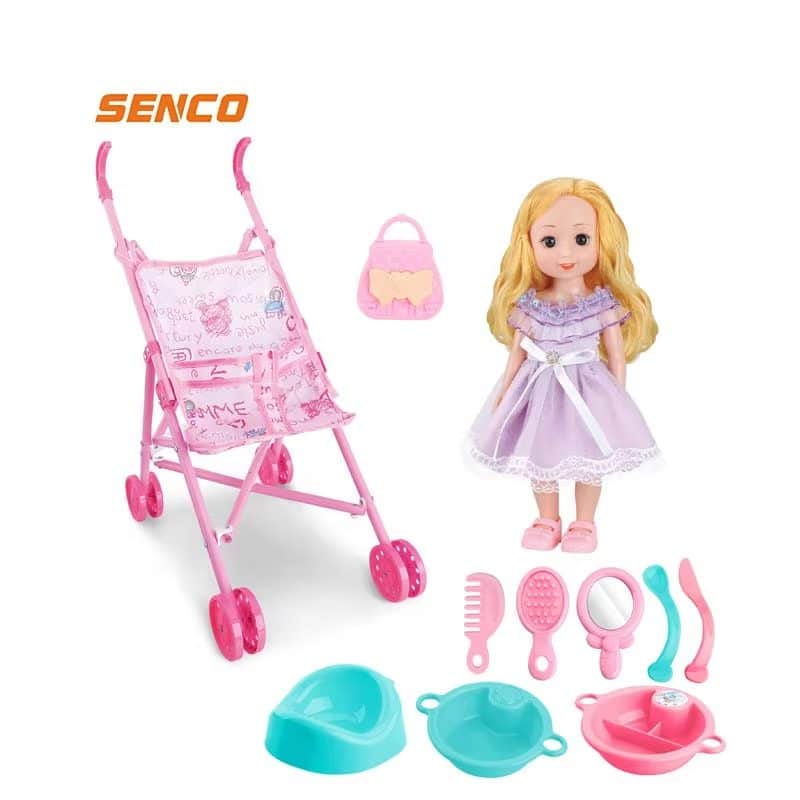
The toy industry has long been labeled as “small products,” but it is actually a typical example of Small Toys Big Industry—with a global market size exceeding $100 billion and continuous growth driven by consumption upgrades, IP commercialization, and cross-border e-commerce prosperity. In the fiercely competitive landscape of Small Toys Big Industry, toy factories can no longer rely on low-cost production and extensive operation to gain profits. Refined operation has become the core key to breaking growth bottlenecks, improving profit margins, and establishing long-term competitiveness in Small Toys Big Industry. It penetrates every link of “product R&D, production, supply chain, sales, and management,” maximizing the value of each link and truly releasing the huge potential of Small Toys Big Industry.
Current Situation and Pain Points of Toy Factories in Small Toys Big Industry
To explore effective refined operation methods, we must first clarify the core pain points facing toy factories in the track of Small Toys Big Industry—these pain points are also the starting point for refined management to solve problems:
- Low profit margins under homogeneous competition in Small Toys Big Industry: Most small and medium-sized toy factories focus on low-value-added products such as plastic toys and plush toys, with serious product homogenization. In the crowded track of Small Toys Big Industry, they can only compete by price, resulting in meager profit margins (many even less than 5%).
- High production and inventory risks in Small Toys Big Industry: Toy demand in Small Toys Big Industry is highly seasonal (such as holidays, mga pagdiriwang) and trend-driven (such as IP derivatives, popular themes). Blind production often leads to overstocking of unsalable products, while insufficient supply of hot-selling products leads to missed opportunities in this potential-rich market.
- Strict safety and compliance requirements in Small Toys Big Industry: Toys involve children’s safety, which is the lifeline of Small Toys Big Industry. Countries around the world have formulated strict safety standards (such as EU EN 71, US ASTM F963, Chinese GB 6675). Non-compliance may lead to product recalls, fines, or even being banned from entering the global market of Small Toys Big Industry.
- Disconnected supply chain and inefficient operation in Small Toys Big Industry: Small Toys Big Industry involves multiple links such as raw material procurement (plastic, fabric, electronic components), processing and production, packaging, and logistics. The lack of coordinated management leads to high costs, long lead times, and poor responsiveness to market changes—directly affecting the competitiveness of toy factories in Small Toys Big Industry.
Core Methods of Refined Operation for Toy Factories in Small Toys Big Industry
Refined operation for toy factories in Small Toys Big Industry is not a vague concept but a systematic project with clear goals and operable steps. Its core lies in “targeted management, data-driven decision-making, and full-link optimization” to unlock the profit potential of Small Toys Big Industry.
1. Product Refinement: Upgrade Value to Stand Out in Small Toys Big Industry
Product is the foundation of profit in Small Toys Big Industry. Refined product operation focuses on improving added value and reducing market risks, helping toy factories break through homogeneous competition.
- IP empowerment and differentiated positioning in Small Toys Big Industry: Cooperate with popular IPs (such as animation, mga pelikula, and cultural IPs) to develop derivative toys, or create original IPs with storylines. This can increase product premium space by 30%-50% in Small Toys Big Industry and reduce the impact of price competition.
- Scenario-based and functional innovation in Small Toys Big Industry: Move beyond traditional entertainment functions and develop toys integrating education, intelligence, and interactivity (such as STEM educational toys, voice-controlled interactive toys, and smart early education toys). These products cater to parents’ demand for “edutainment” in Small Toys Big Industry and have higher profit margins.
- Demand-oriented R&D iteration in Small Toys Big Industry: Use data analysis tools to collect consumer feedback from sales channels and social media, and grasp hot trends in Small Toys Big Industry (such as environmental protection, light luxury, and customization). Shorten the R&D cycle of new products from 6-12 months to 3-6 months, and improve the success rate of new product launches in this dynamic market.
2. Lean Production: Ensure Safety and Efficiency to Stabilize Foundations in Small Toys Big Industry
Production is the key link to control costs in Small Toys Big Industry. Toy factories need to balance “safety compliance, production efficiency, and cost control” through refined management to consolidate their position in the industry.
- Standardize safety and quality control in Small Toys Big Industry: Establish a full-link quality inspection system, from raw material procurement (such as non-toxic plastic, flame-retardant fabric) to production processing (such as edge trimming, component assembly) and finished product testing (such as drop test, toxicity test). Embed global safety standards into every production process to avoid compliance risks that may lead to withdrawal from Small Toys Big Industry.
- Optimize production process and reduce waste in Small Toys Big Industry: Introduce lean production concepts (such as 5S management, Kanban management) to eliminate waste such as excess inventory, idle equipment, and defective products. Halimbawa, adopt “small-batch, multi-variety” production mode to adapt to the diversified characteristics of products in Small Toys Big Industry, and reduce raw material waste to less than 3%.
- Intelligent transformation of key links in Small Toys Big Industry: For labor-intensive processes (such as cutting, pananahi, and packaging), introduce automated equipment (such as CNC cutting machines, automatic sewing robots) to improve production efficiency by 20%-30% and reduce labor costs. Use MES (Manufacturing Execution System) to monitor production progress and quality data in real time, and quickly respond to production abnormalities—ensuring stable supply capacity in Small Toys Big Industry.
3. Supply Chain Refinement: Build Flexibility to Adapt to Changes in Small Toys Big Industry
The supply chain is the lifeline of toy factories in Small Toys Big Industry. Refined management can reduce costs and improve responsiveness, helping enterprises cope with market fluctuations in this industry.
- Optimized procurement of raw materials in Small Toys Big Industry: Establish long-term cooperative relationships with 2-3 core suppliers for key raw materials (such as food-grade plastic, electronic components) to lock in prices and ensure quality stability. For non-core materials, adopt a “multi-supplier bidding” model to control procurement costs in Small Toys Big Industry.
- Intelligent inventory management in Small Toys Big Industry: Use ERP systems to establish an inventory dynamic monitoring mechanism. Classify toys by “fast-selling, normal-selling, and slow-selling” and set safety stock levels. For seasonal products in Small Toys Big Industry, adopt the “pre-order + flexible production” model to reduce inventory backlogs; for hot-selling products, reserve raw materials in advance to shorten delivery time.
- Shorten logistics cycles and reduce costs in Small Toys Big Industry: Cooperate with professional logistics companies with cross-border and domestic distribution capabilities. Optimize logistics routes (such as nearby warehousing for cross-border e-commerce) and adopt lightweight and environmentally friendly packaging materials to reduce transportation costs by 10%-15%. For overseas markets in Small Toys Big Industry, use local logistics partners to improve delivery timeliness and enhance customer satisfaction.
4. Omnichannel Refined Operation: Expand Channels to Increase Volume in Small Toys Big Industry
Sales channels are the gateway to profit realization in Small Toys Big Industry. Refined channel operation focuses on “precision matching and efficient conversion” to expand market share.
- Deepen cross-border e-commerce layout in Small Toys Big Industry: Target major overseas markets (such as Europe, America, Southeast Asia) and settle in mainstream platforms (Amazon, eBay, Shopee). Customize product packaging, instructions, and marketing content according to local consumer habits and preferences in Small Toys Big Industry. Use platform data to analyze user portraits and launch targeted promotions.
- Layout offline scenario-based sales in Small Toys Big Industry: Cooperate with large supermarkets, toy specialty stores, and children’s playgrounds to set up experience zones. Allow consumers to touch and try products, which improves the conversion rate of high-value-added toys in Small Toys Big Industry. Establish direct cooperative relationships with kindergartens and early education institutions to develop B-end bulk orders.
- Build private domain traffic in Small Toys Big Industry: Use social media (TikTok, Instagram, WeChat) to release product demonstration videos, IP stories, and parent-child interaction content to attract fans. Guide users to join member groups, provide exclusive discounts, and after-sales services to improve customer repurchase rate—laying a solid foundation for long-term development in Small Toys Big Industry.
5. Cost Refined Control: Tap Potential to Increase Profits in Small Toys Big Industry
Cost control is the key to improving profit margins in Small Toys Big Industry. Toy factories can tap profit potential through refined cost management without reducing product quality.
- Raw material cost control in Small Toys Big Industry: Conduct regular market research on raw materials, lock in prices when they are low, and use alternative materials (such as environmentally friendly recycled plastic) without reducing quality to reduce procurement costs.
- Energy and auxiliary material saving in Small Toys Big Industry: Upgrade energy-saving equipment (such as LED lighting, energy-saving motors) to reduce electricity consumption. Formulate consumption quotas for auxiliary materials (such as paint, thread, and packaging boxes) and link them to production team performance to avoid waste.
- Management cost optimization in Small Toys Big Industry: Streamline redundant positions through job analysis and adopt cross-training to improve the utilization rate of employees. Use cloud-based management tools to reduce the cost of office software and data storage—freeing up more funds for core business development in Small Toys Big Industry.
Case: How a Toy Factory Achieved Profit Growth in Small Toys Big Industry
A medium-sized toy factory in Guangdong, specializing in plush toys and electronic educational toys, once faced problems such as low profit margins (only 4%) and serious inventory backlogs in Small Toys Big Industry. After implementing refined operation around Small Toys Big Industry’s characteristics:
- Product refinement: Cooperated with a domestic popular animation IP to launch derivative plush toys, increasing the product premium by 40% in Small Toys Big Industry. At the same time, developed smart educational toys with voice interaction functions, which were priced 2-3 times higher than traditional products and achieved strong market response.
- Lean production: Introduced automatic cutting and sewing equipment, reducing labor costs by 25% and improving production efficiency by 30%. Established a full-link quality inspection system, passing EU EN 71 and US ASTM F963 certifications, and successfully entered the European and American markets of Small Toys Big Industry.
- Supply chain optimization: Used ERP systems to realize dynamic inventory monitoring, reducing inventory backlogs by 60% and reducing capital occupation costs by 15% in Small Toys Big Industry. Cooperated with local logistics companies in Europe and America to shorten the delivery cycle from 30 days to 7-10 days.
- Omnichannel operation: Settled in Amazon and TikTok Shop, and through targeted marketing content, the cross-border sales volume increased by 120% within one year in Small Toys Big Industry. Established a private domain community with 50,000+ fans, with a repurchase rate of 35%.
After one and a half years of refined operation, the factory’s overall profit margin increased from 4% sa 18%, and the annual turnover exceeded 100 million yuan. It successfully transformed from a low-cost manufacturer to a high-value-added brand enterprise in Small Toys Big Industry, proving that refined operation is the key to unlocking the potential of Small Toys Big Industry.
Konklusyon: Refined Operation Unlocks the Long-Term Potential of Small Toys Big Industry
Small Toys Big Industry is not just a slogan—it represents a market with huge space and sustainable growth. For toy factories, refined operation is not a one-time measure but a long-term strategic habit that must be adhered to in Small Toys Big Industry. It requires enterprises to establish a data-driven thinking mode, focus on consumer demand, and continuously optimize every link of operation.
In the future, with the deep integration of technologies such as AI, IoT, and big data into Small Toys Big Industry, refined operation will usher in more innovative methods—such as intelligent customization based on user portraits, predictive production through demand forecasting, and transparent supply chain management. Toy factories that take the lead in mastering refined operation capabilities will surely stand out in the fierce competition of Small Toys Big Industry and grow steadily in this promising track.

