

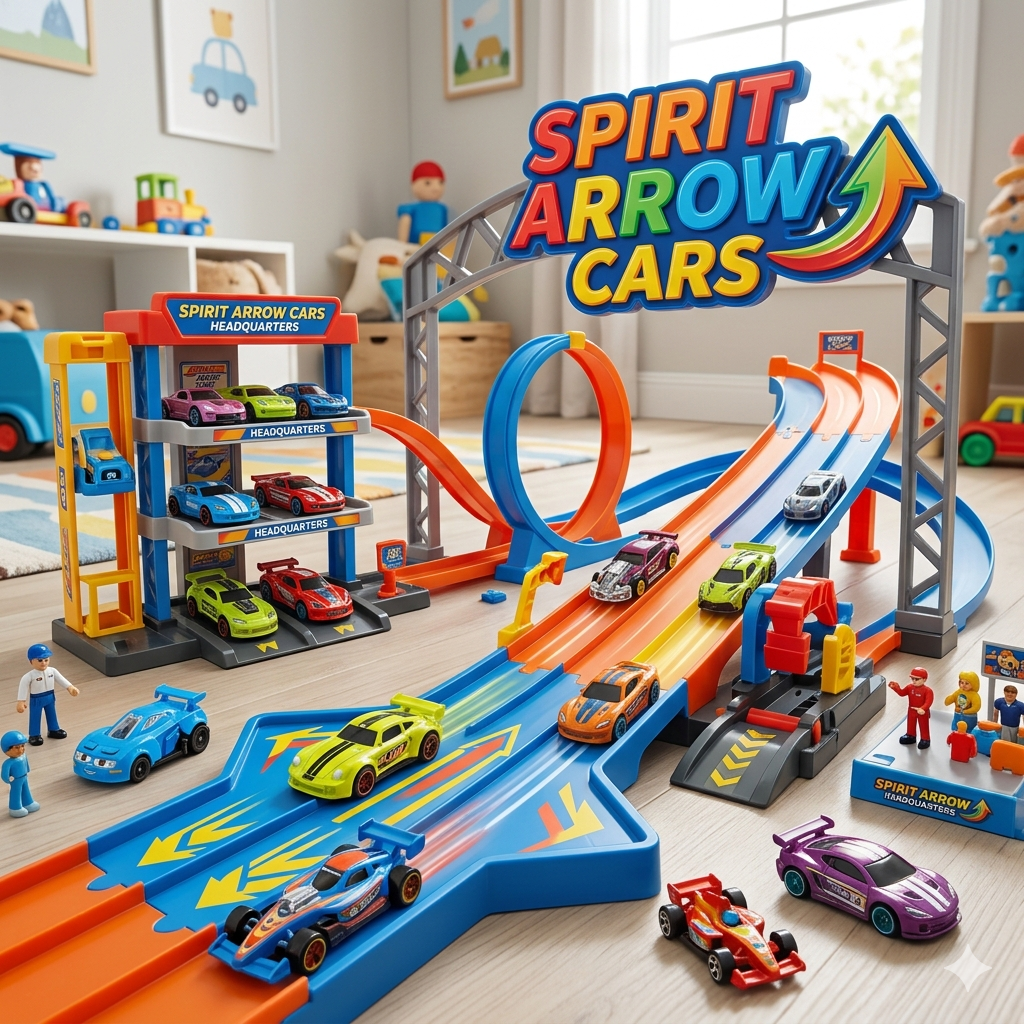
Every die-cast enthusiast knows that the beating heart of miniature racing lives inside a precision toy car factory. But lately, one specific name has been echoing through the community, reshaping how we look at 1:64 scale racers: Mga sasakyan ng Spirit Arrow. If you are tired of generic plastic models that flip over the moment they hit a loop-de-loop, you are not alone. The shift toward weighted, friction-powered, and ultra-durable metal models is happening right now, and it is all coming from a manufacturing process that prioritizes raw performance over cheap mass production.
Let’s pull back the curtain on what makes these miniature speedsters a true revolution for both kids and adult collectors.
Behind the Scenes at the Toy Car Factory
When you think of a modern toy car factory, you might picture endless rows of cheap plastic molds and flimsy axles. Gayunpaman, producing high-caliber pocket racers requires an entirely different setup. True durability starts with high-pressure die-casting, a process where molten metal alloy is forced into precision-engineered molds under immense force.
Why does this matter to the average collector? It comes down to weight distribution. A lightweight plastic vehicle lacks the momentum to complete complex gravity tracks. By combining a dense metal upper shell with an ABS plastic undercarriage, the factory creates a low center of gravity. This specific engineering choice ensures that the vehicle hugs the track tighter, tracks straighter, and absorbs impacts without cracking.
What Sets Spirit Arrow Cars Apart from the Competition?
The die-cast market is incredibly crowded, yet Mga sasakyan ng Spirit Arrow have carved out a massive following by focusing heavily on mechanics rather than just flashy paint. While most budget models rely on standard free-rolling wheels, these racers utilize specialized high-torque friction wheels.
Here is how they stack up against standard mass-market alternatives:
| Performance Metric | Spirit Arrow Cars | Standard Mass-Market Cars |
| Primary Material | Heavy Die-Cast Metal Alloy | Lightweight Thin Plastic or Cheap Tin |
| Wheel Mechanism | Friction-Powered, High-Grip Rubber | Free-Rolling Loose Plastic |
| Chassis Security | Multi-Point Riveted ABS Base | Snap-On Low-Density Plastic |
| Track Stability | High (Low Center of Gravity) | Low (Prone to Flipping on Turns) |
| Recommended Age | 3+ Years and Collectors | 3+ Years Only |
Collector’s Note: The inclusion of rubberized friction tires gives these vehicles an immediate advantage on smooth surfaces like hardwood floors or polished plastic tracks. They don’t just slide; they grip and launch.

The Engineering Inside the Assembly Line
To understand why these vehicles perform so well, we have to look closer at the actual assembly line. A premium assembly framework relies on four critical stages to guarantee track-ready performance right out of the box.
1. The Die-Cast Metal Core Injection
The factory utilizes an advanced zinc-aluminum alloy mixture. This specific blend provides the classic “heavy in the hand” feel that collectors love, while ensuring the body pillars don’t bend during intense wall collisions.
2. High-Precision Axle Alignment
If a toy car’s axle is off by even half a millimeter, the vehicle will pull to the left or right, ruining its speed profile. The factory uses computerized alignment jigs to press the metal axles perfectly perpendicular to the chassis.
3. Anti-Friction Wheel Fitting
Instead of using stiff plastic wheels that create drag, these models feature independent wheel rotation with internal lubrication. This reduces mechanical drag by up to 40%, allowing the vehicle to maintain its top speed for longer distances.
4. Eco-Friendly Electrostatic Coating
Ever notice how cheap toys lose their paint after a single crash? By using electrostatic powder coating, the paint chemically bonds to the metal shell. The result is a vibrant, scratch-resistant finish that survives endless hours of rough play.
Why Collectors and Parents are Making the Switch
Para sa mga magulang, buying toys in 2026 often feels like a guessing game of “how long until this breaks?” Cheaply produced toys end up in the recycling bin within a week. Because Mga sasakyan ng Spirit Arrow balance structural integrity with affordable pricing, they cross the bridge between durable children’s toys and display-worthy collector items.
The tactile experience is a massive selling point. When you push one forward, the friction motor catches with a satisfying, subtle hum. There are no electronic chips to malfunction, no batteries to constantly replace, and no companion apps required to enjoy the fun. It is pure, unadulterated mechanical engineering.
Maximizing Your Collection: Track Optimization Tips
If you are looking to build the ultimate home racing circuit for your die-cast collection, keep these core physics rules in mind to get the most out of your vehicles:
- Keep the Track Clean: Dust is the absolute enemy of friction motors. A quick wipe down of your plastic tracks with a micro-fiber cloth prevents debris from jamming the micro-axles.
- The 45-Degree Drop Rule: For gravity-fed launches, an initial drop angle between 40 at 45 degrees offers the perfect balance between downward acceleration and smooth transition into horizontal track pieces.
- Avoid Wet Environments: While the outer shells are highly resistant to chipping, moisture can degrade the internal spring mechanisms of friction wheels over time. Keep your racing indoors!
The Future of Miniature Die-Cast Racing
As the industry moves forward, the modern toy car factory must evolve to meet higher environmental and performance standards. The trend is moving away from disposable single-use plastic toys toward sustainable, long-lasting metal collectibles. By focusing heavily on robust materials and flawless mechanical execution, brands are proving that simple, beautifully crafted toys still hold a massive place in our high-tech world.
Whether you are building an elaborate multi-tiered stunt track in your living room or organizing a pristine display shelf, investing in vehicles engineered for performance makes all the difference. They don’t just look like sleek speed machines—they are built to back it up on the tarmac.