


In the fast-paced modern life, electronic toys are abundant, but handmade toys have a unique charm. They can not only stimulate children’s creativity and imagination but also strengthen the emotional bond between parents and children. I dag, let’s step into the world of DIY handmade toys and embark on a fun and creative parent-child handicraft journey.
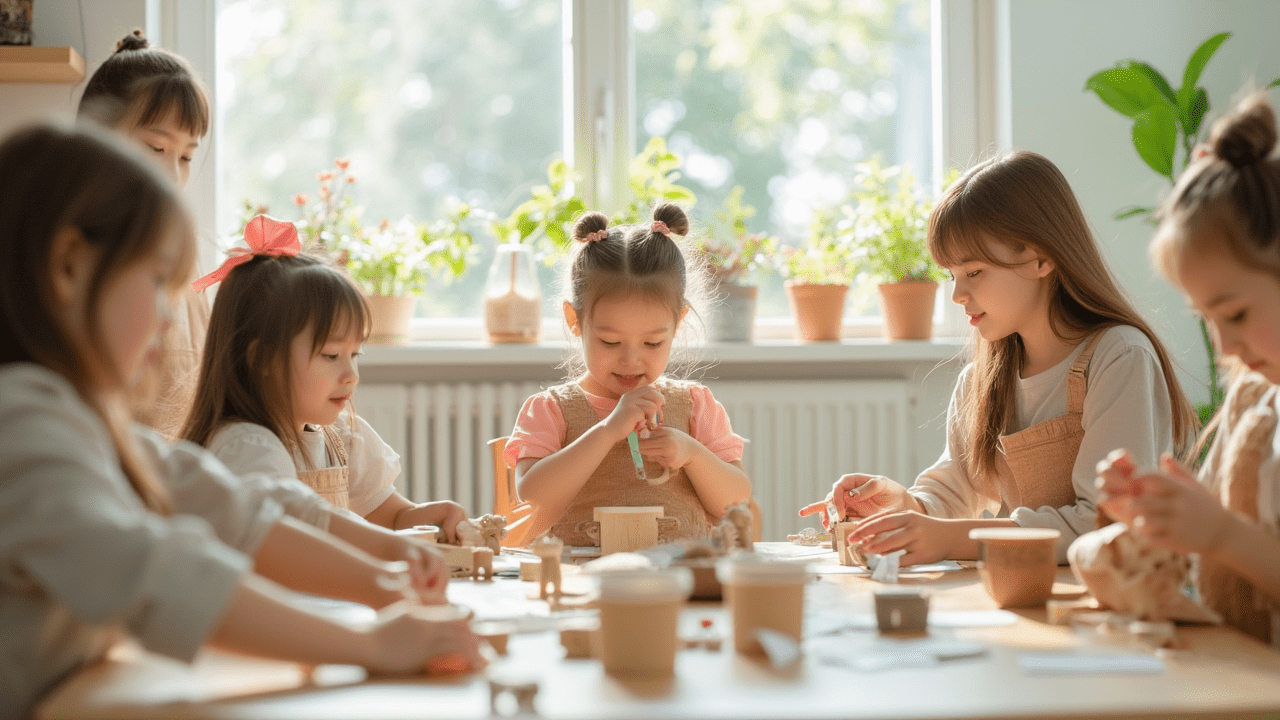
I. Handmade Toy Tutorials: Easy to Learn, Lots of Fun
(en) Paper Toy Making
Paper toys are the easiest handmade toys to get started with. All you need are some colored paper, scissors, and glue to create a variety of toys.
Paper Airplane Battle
- Materialer: A4 paper, colored markers
- Steps:
- Lay the A4 paper flat on the table and fold it along the long edge, then unfold it.
- Fold the two upper corners of the paper towards the center line so that the tips of the corners align with the center line, forming a triangle.
- Fold the bottom edge of the triangle upwards so that it aligns with the center line.
- Fold the two upper corners of the triangle towards the center line again to form a smaller triangle.
- Turn the paper over, fold the bottom triangle upwards, then fold the sides towards the center line, and finally fold the bottom triangle downwards to hold the sides in place. The paper airplane is now basically formed.
- Use colored markers to draw your favorite patterns on the paper airplane, such as stars, clouds, or your favorite cartoon characters. A one-of-a-kind paper airplane is now complete.
- How to Play: Parents and children can make several paper airplanes together and then have a flying competition outdoors to see whose paper airplane flies the farthest and most steadily. You can also try adjusting the folding method of the paper airplane to explore different flight trajectories.

Paper Puppet Theater
- Materialer: Cardboard, colored paper, scissors, lim, small sticks
- Steps:
- Cut a rectangular puppet stage from the cardboard. You can cut a semicircular window at the top of the stage for the puppet performance.
- Cut out various puppet shapes from colored paper, som dyr, people, or cartoon characters. Draw eyes, mouths, and other details on the paper, then cut them out with scissors.
- Attach small sticks to the back of the puppets with glue so that you can control the movements of the puppets by manipulating the sticks.
- Parents and children can work together to create a simple story and then perform it on the stage with the puppets. Children can use their imagination to voice the puppets, making the story more lively and interesting.
- How to Play: Through the paper puppet theater, children can learn story arrangement and performance skills, while also exercising their language expression and teamwork abilities.

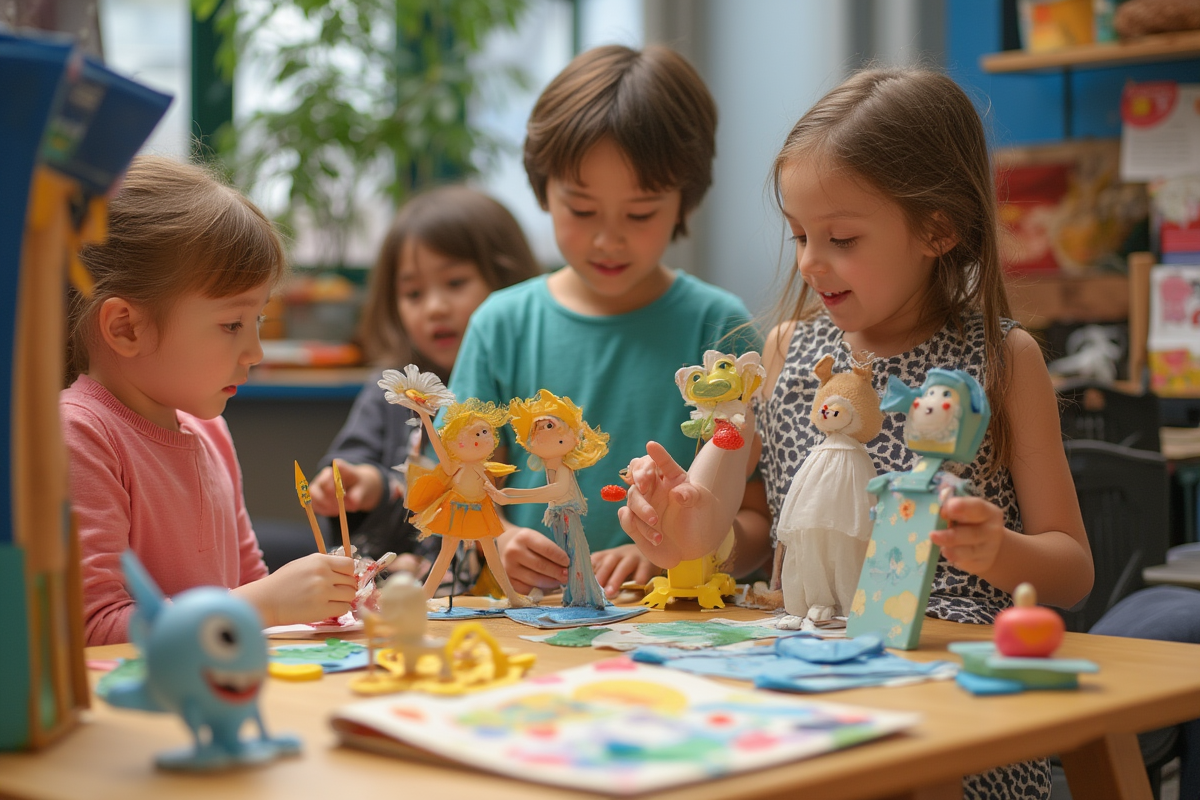
(b) Fabric Toy Making
Fabric toys are not only beautiful but also soft to the touch, making them suitable for children to play with for extended periods.
Fabric Animal Dolls
- Materialer: Colored fabric, stuffing, needle and thread, knapper, scissors
- Steps:
- Choose the right fabric and draw the shapes of the animal you want to make on it, such as the head, kropp, and limbs of a dog. Then carefully cut them out with scissors.
- Sew the cut-out fabric pieces together along the edges with a needle and thread, leaving a small opening for stuffing.
- Fill the animal doll with an appropriate amount of stuffing to make it look plump and cute. Then sew up the opening.
- Use buttons as the eyes of the animal and sew them onto the head in the right position. You can also cut out details like the nose and mouth of the animal from different colored fabrics and glue or sew them in place.
- How to Play: Children can sleep with the fabric animal dolls they made with their own hands or play with them, telling stories to the dolls, which helps to cultivate their love and sense of responsibility.


II. Creative Toy Design: Unleash Infinite Creativity
The design philosophy of creative toys is to make toys more than just toys but also a form of art and emotional expression. Through unique designs, children can learn more knowledge and skills while playing.
(en) Eco-friendly Creative Toys
In today’s world where environmental awareness is increasingly important, making toys from waste materials is not only a way to save resources but also a creative eco-friendly action.
Plastic Bottle Wind Chime
- Materialer: Used plastic bottles, colored ribbons, bells, scissors, lim
- Steps:
- Clean the used plastic bottles and carefully cut them into different shapes with scissors, such as petal or leaf shapes.
- Thread the cut plastic bottle pieces with colored ribbons. You can tie the ends of the ribbons together to form a loop.
- Attach bells to the bottom of the ribbons so that they will make pleasant sounds when the wind blows.
- You can make several plastic bottle wind chimes and then combine them together, hanging them by the window or on the balcony. Children can enjoy the beautiful sound of the wind chimes while also experiencing the fun of being environmentally friendly.
- Design Philosophy: By turning used plastic bottles into beautiful wind chimes, children can understand the importance of waste utilization and develop their environmental awareness. Samtidig, the sound and shape of the wind chimes can also stimulate children’s auditory and visual perception abilities.
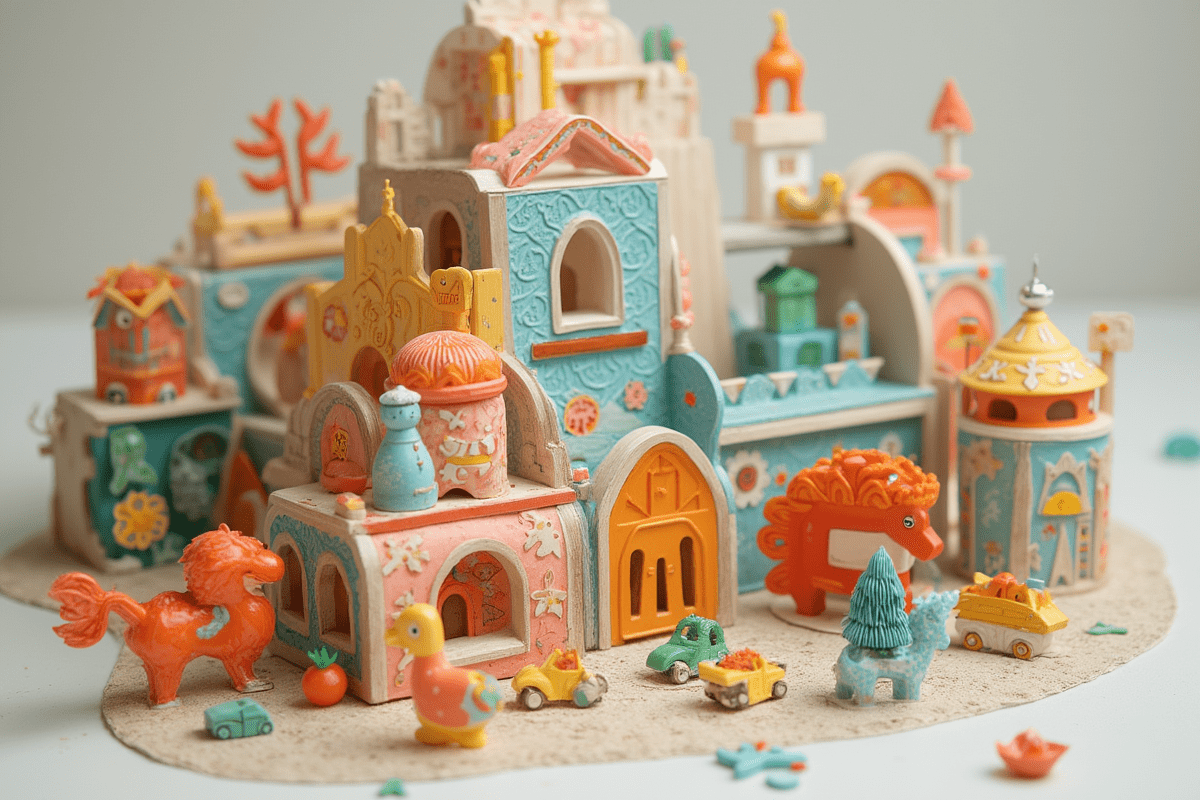
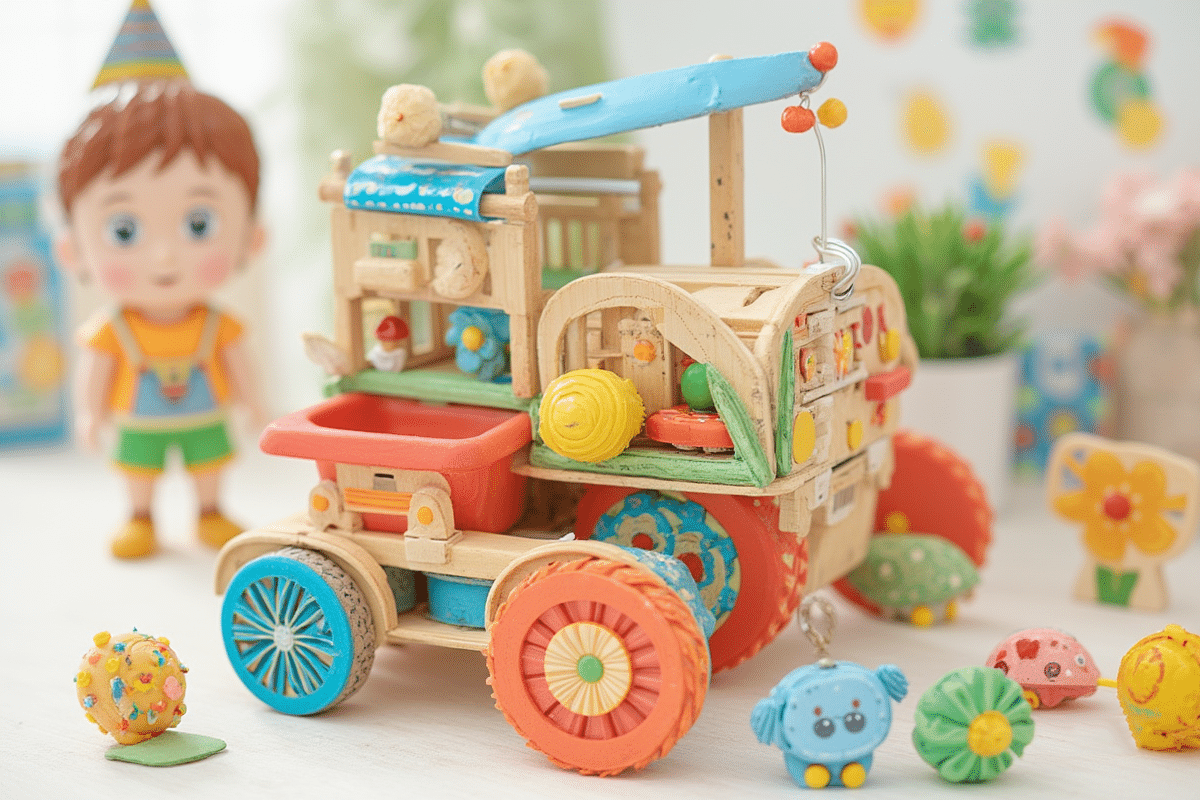
(b) Smart Creative Toys
Combining modern technological elements, design smart creative toys that are both fun and educational.
Simple Programming Robot
- Materialer: Small motor, battery holder, wires, cardboard box, colored pens, scissors, lim
- Steps:
- Make the robot’s body with a cardboard box. You can draw the facial expressions and body details of the robot on the cardboard box, then carefully cut them out with scissors.
- Install the small motor at the bottom of the cardboard box and connect the motor to the battery holder with wires. Make sure the wires are connected correctly to ensure the motor operates normally.
- Draw a control panel for the robot on the cardboard box with colored pens. You can design some simple buttons and switches to allow children to control the robot’s movement direction and speed by pressing the buttons.
- When the batteries are installed in the battery holder, press the button, and the motor will drive the cardboard box to move. A simple programming robot is now complete.
- Design Philosophy: This simple programming robot allows children to understand the basic concepts and principles of programming while playing, stimulating their interest in and desire to explore technology. Samtidig, by making the robot themselves, children can also improve their hands-on and problem-solving abilities.


III. Parent-Child Handicraft Activities: Enhance Parent-Child Relationships and Share Wonderful Moments
Parent-child handicraft activities are a bridge for communication and interaction between parents and children. By making handmade toys together, parents can better understand their children’s thoughts and interests, while children can feel the warmth and love of the family.
(en) Family Handicraft Day
You can regularly hold a family handicraft day, such as every Saturday afternoon. The whole family can sit together and choose a handicraft toy project to work on. During this process, parents can guide children to think about the design and production methods of the toys and encourage them to use their imagination and creativity. When the handmade toys are completed, children will feel a great sense of achievement, and parents will also better understand their children’s thoughts and interests, enhancing mutual understanding and trust.
(b) Handmade Toy Exhibition
Collect the handmade toys made by family members and hold a small exhibition. You can invite relatives and friends to visit and let the children introduce the design concepts and production processes of the toys they made. In this way, children can exercise their expressive abilities and self-confidence, while also feeling the cohesion and sense of belonging of the family.
(c) Handmade Toy Storytelling
After the handmade toys are completed, parents can work with children to create a story about these toys. For eksempel, how the toys met each other and what interesting things happened between them. Then, parents and children can take turns telling the story or performing the scenes in the story together. This kind of handmade toy storytelling can not only stimulate children’s imagination and creativity but also deepen the emotional bond between parents and children.

The world of handmade toys is full of endless possibilities and fun. Through handmade toy tutorials, creative toy design, and parent-child handicraft activities, we can not only create unique toys for children but also cultivate their creativity, hands-on abilities, and emotional expression skills in the process. Let’s all pick up our tools and make handmade toys with our children together to create wonderful memories.