

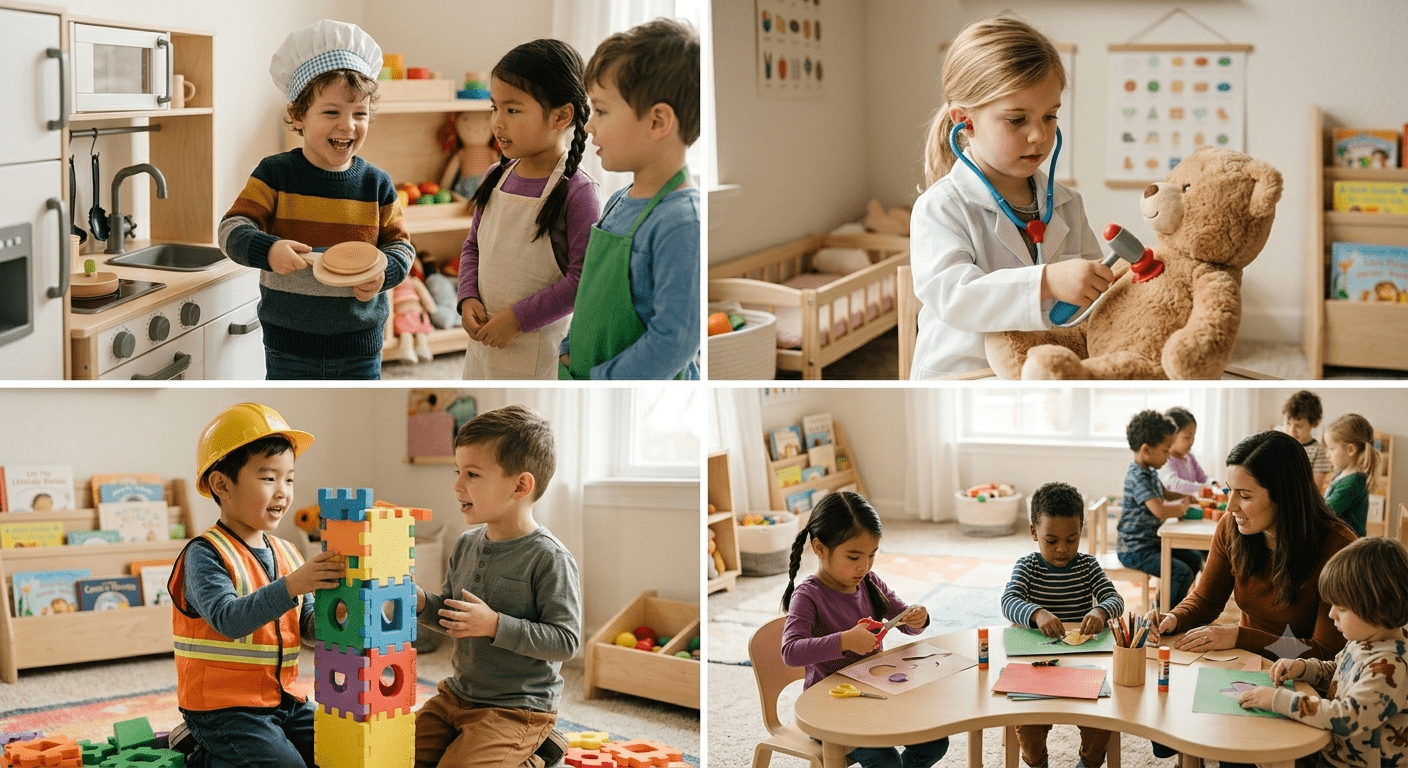
Parents today face an overwhelming avalanche of choices when it comes to keeping their little ones entertained. From flashing digital tablets to apps promising to turn toddlers into mini-geniuses overnight, the options are endless. However, child development experts keep pointing us back to the basics. If you want to set your child up for a lifetime of success, the secret doesn’t lie in a screen. It lies in the powerful combination of educational toys, pretend play, and preschool preparation.
When we look at early childhood development, these three elements shouldn’t exist in separate silos. Instead, they form a golden triangle of learning. By introducing the right tools at home, you aren’t just filling up a toy box—you are building the cognitive, social, and emotional scaffolding your child needs to thrive.
Educational Toys: More Than Just ABCs and 123s
When many people hear the phrase “educational toys,” they immediately picture flashcards or electronic gadgets that bark out letters and numbers. But true early learning is much deeper, more tactile, and wonderfully messy.
The best tools for development are open-ended. Think of classic wooden building blocks, magnetic tiles, nesting cups, and marble runs. These aren’t just objects to pass the time; they are a child’s first introduction to physics, geometry, and engineering.
The Magic of Pretend Play: Training the Mind for Reality
If educational toys provide the raw cognitive bricks, pretend play is the mortar that holds everything together. Somewhere around the age of two, a delightful shift happens: a banana suddenly becomes a telephone, a cardboard box transforms into a spaceship, and your living room rug turns into a moat filled with molten lava.
This isn’t just cute behavior; it is a massive cognitive leap known as symbolic representation. It is the exact same mental skill required later in life to understand that a squiggle on a page (a letter) represents a sound, or that a symbol ($+$) means addition.
1. Social-Emotional Mastery
When children step into a doctor’s coat, put on a chef’s hat, or nurse a stuffed bear back to health, they are practicing empathy. They are stepping outside of their own ego and viewing the world through someone else’s eyes. They negotiate roles with siblings or playmates (“You be the astronaut, and I’ll be the alien!”), which teaches them the art of compromise, sharing, and emotional regulation.
2. Rapid Language Acquisition
Have you ever eavesdropped on a child playing with a toy kitchen or a dollhouse? The vocabulary they use during imagination-driven play is often far more complex than their everyday speech. They narrative scenarios, try out adult phrases they’ve overheard, and experiment with tone and inflection. It is a risk-free rehearsal space for language.
Bridging the Gap to Preschool Success
The ultimate test for these developing skills is the transition into a structured environment like preschool. Moving from the comfort of home to a classroom full of peers can be daunting for a young child. However, kids who have spent their toddler years engaging with educational toys and imaginative scenarios generally have a massive head start.
Preschool teachers don’t expect incoming three-year-olds to know how to read or do multiplication. What they do look for are “school readiness” skills, which include:
- The ability to focus on a task for more than a few minutes.
- The fine motor control needed to hold a crayon or use safety scissors.
- The social capacity to share resources and take turns.
A child who has spent hours manipulating playdough, threading beads, and navigating imaginary grocery store lines has already mastered these prerequisites. They enter the classroom confident, curious, and ready to collaborate.

How to Create an Enriched Play Environment at Home
You don’t need a massive budget or a dedicated playroom to foster these crucial skills. Creating a rich environment is all about intentionality.
Rotate, Don’t Accumulate
Too many choices lead to sensory overload. If a child sees fifty toys scattered on the floor, their brain gets overwhelmed, leading to shorter attention spans. Instead, keep a few high-quality educational toys out on low, accessible shelves, and box the rest up. Every few weeks, swap them out. Old toys will feel brand new again, sparking fresh waves of creativity.
Mix Real with Imaginary
Combine structured learning tools with abstract elements. Pair a set of counting bears with a toy cash register and some real junk mail. Watch how quickly your child invents a complex banking system. By blending the structured with the unstructured, you supercharge both sides of their brain.
Parenting Pro-Tip: The best toy is often the one where the child does 90% of the work and the toy does only 10%. If a toy only requires a child to sit back and press a button to watch a light show, it’s entertaining them, not educating them.
Conclusion: Investing in the Journey
In a world obsessed with fast-tracking childhood, the most radical and beneficial thing we can do for our kids is to let them play with purpose. By providing thoughtfully curated educational toys, actively encouraging messy, wild pretend play, and aligning these habits with the expectations of modern preschool environments, you are giving your child the greatest gift possible: a deep-seated love for learning.
So, clear off the coffee table, dump out the blocks, put on a silly hat, and join the adventure. The future begins on the playroom floor.